
Ezekiel Dalhatu’s Senate agenda
The FCT’s Unfinished Story
Recognition. Protection. Participation. Prosperity.
Completing the Abuja Project
A practical agenda for Original Inhabitants, inclusive development and the future of the Federal Capital Territory.
Abuja was created to be common ground for Nigeria — a capital in which citizens from every part of the country could meet as equals.
But the land on which the capital was built was not empty. It was already home to long-established communities whose ancestral lands, settlements, cultures and livelihoods became part of the national capital project.
Nearly fifty years later, one important part of that story remains unfinished: the full, dignified and economically meaningful integration of the Original Inhabitants of the Federal Capital Territory into the future of Abuja.
Ezekiel Dalhatu's Senate agenda is about completing that story — not by turning back development, but by making development fairer, more inclusive and more sustainable.
A modern Abuja and a just Abuja should be the same city.
Read the wider case for fairness on the Equity page, and the delivery record on Development.
How this connects to FCT FIRST
Building the future withoutforgetting the people who havealways called the FCT home.
The FCT FIRST manifesto is the forward agenda: infrastructure, mobility, health, human capital, education and accountable representation. This page is the historical and justice case behind it — recognition, protection and participation for the communities the capital was built around. The two documents reinforce one another; neither replaces the other.
Core philosophy
The principle
The future of Abuja should not require a choice between development and justice.
The capital can continue to grow as a modern, competitive and globally respected city while recognising, protecting and integrating the communities whose ancestral lands made that development possible.
Recognition
Knowing and acknowledging the people, settlements, history and cultural heritage that existed before the modern capital.
Protection
Protecting land interests, heritage, community continuity and fair treatment when development affects existing communities.
Participation
Ensuring affected communities have a meaningful and continuing voice in decisions that shape their future.
Prosperity
Turning inclusion into real economic opportunity through enterprise, agriculture, skills, tourism, technology and access to the wider economy of the capital.
Development without displacement.
Inclusion without conflict.
The unfinished question
What remainsunfinished?
- Communities existed across the territory before Abuja became the Federal Capital.
- The creation and expansion of the capital transformed land ownership, settlements and livelihoods.
- Some communities were relocated while others remained.
- Questions around tenure, compensation, services, heritage and participation have persisted.
- The growth of the modern capital has not always been matched by equivalent development in host communities.
- These issues affect equity, stability, security and confidence in public institutions.
This is not about reopening the past. It is about finishing the work.
Why this matters to everyone
This is not an agendaagainst anyone
Abuja belongs to all Nigerians.
Justice for the Original Inhabitants and equal belonging for every lawful resident of the FCT are not competing objectives.
A capital that resolves long-standing questions around communities, land, planning and development becomes more stable, more investable, more cohesive and better prepared for growth.
National cohesion
A capital that respects its history while remaining open to every Nigerian.
Security and stability
Communities with a meaningful stake in development are better partners in maintaining peace and stability.
Investment confidence
Clearer community, planning and land processes reduce uncertainty around development.
Sustainable urbanisation
Communities should be integrated into growth rather than pushed permanently into informal conditions.
Cultural identity
Abuja should possess a living cultural identity as well as monuments and government institutions.
Economic opportunity
Development should create pathways into jobs, enterprise, agriculture, tourism, skills and technology.
The plan
Ezekiel's eight-pointagenda
Eight proposals for recognition, protection, participation and prosperity in the Federal Capital Territory.
- 01
Integrate Original Inhabitants into the future of FCT planning
The interests, settlements, heritage and economic future of Original Inhabitants should become part of long-term FCT planning rather than matters considered only after development decisions have been made.
What success looks like
- Community interests recognised within planning.
- Greater certainty around development.
- Long-term rather than ad-hoc policy.
- 02
Create a permanent community voice
Ezekiel supports a durable mechanism through which Original Inhabitant communities can participate meaningfully in decisions affecting land, development, heritage and community welfare.
Representation should include
- Traditional institutions
- Young people
- Women
- Professionals
- Community representatives
- Relevant government institutions
What success looks like
- A standing, representative channel rather than one-off consultation.
- Decisions explained back to the communities they affect.
No single community should dominate the structure.
- 03
Map and preserve the history of the FCT
You cannot protect what has never been properly recorded.
Comprehensive mapping of
- Ancestral settlements
- Relocated communities
- Sacred sites
- Cultural landscapes
- Traditional institutions
- Festivals
- Oral histories
- Tangible and intangible heritage
What success looks like
- A reliable public record of the territory's history.
- Heritage considered before, not after, development decisions.
This knowledge should inform planning and development decisions rather than sitting unused in an archive.
- 04
Build an inclusive planning and zoning system
The agenda supports planning categories capable of recognising community and heritage realities alongside commercial development.
Development and community protection should appear on the same map.
Planning categories
- Protected cultural landscapes
- Heritage conservation areas
- Community development zones
- Urban integration zones
- Economic opportunity zones
What success looks like
- Community and heritage areas visible in official planning instruments.
- Fewer disputes arising from unclear land and planning status.
- 05
Assess community impact before major development
The framework would establish an Indigenous Impact Assessment for major projects affecting communities, heritage or land interests.
This is not a veto on development. It is a discipline requiring major projects that affect communities, heritage or land interests to understand those impacts before approval rather than attempting to repair damage afterwards.
Indigenous Impact Assessment
- Step 1: Screen
- Step 2: Scope
- Step 3: Assess
- Step 4: Mitigate
- Step 5: Decide
- Step 6: Monitor
What success looks like
- Impacts understood before approval.
- Mitigation agreed in advance and monitored afterwards.
- 06
Upgrade communities before displacing them
Displacement should be a last resort, not the first response.
Improve where people live before asking them to leave.
Upgrade priorities
- Secure tenure
- Roads
- Drainage
- Water
- Electricity
- Schools
- Primary healthcare
- Waste management
- Safe public space
Where relocation is genuinely unavoidable, the agenda supports
- Fair compensation.
- Livelihood restoration.
- Community participation.
- Cultural continuity.
- A transparent process.
- 07
Turn inclusion into economic opportunity
From land to skills. From skills to enterprise. From enterprise to prosperity.
FCT young people should not stand outside the prosperity being created around them. They should help build it, participate in it and benefit from it.
Economic pathways
- SME support
- Cooperatives
- Access to finance
- Enterprise hubs
- Agriculture
- Storage and processing
- Market access
- Heritage tourism
- Creative industries
- Vocational skills
- Entrepreneurship
- Digital skills
- Technology-enabled business
What success looks like
- Community income that does not depend on land transactions alone.
- Young people and women visibly represented in new enterprise.
Youth and women first in opportunity.
- 08
Measure what government actually delivers
An agenda without measurement is only an intention. Ezekiel's agenda should carry milestones, named responsibilities and public reporting.
The accountability standard
- Measurable milestones
- Clear institutional responsibilities
- Regular public reports
- Independent scrutiny
- Progress indicators
- Public accountability
How progress is reported
- Step 1: Promise
- Step 2: Action
- Step 3: Evidence
- Step 4: Public report
Representation you can see, reach and measure.
A phased programme
From policyto delivery
This is not presented as an overnight transformation. Serious reform requires sequence, institutions, evidence and measurable delivery.
Phase one
0–2 yearsFoundation and mapping
- Establish the institutional framework.
- Complete historical and cultural mapping.
- Undertake baseline community profiling.
- Establish reliable planning information.
- Identify priority communities and needs.
Phase two
3–5 yearsIntegration and zoning
- Integrate inclusive planning measures.
- Operationalise impact assessment.
- Begin community-upgrade programmes.
- Establish enterprise and skills hubs.
- Begin visible delivery.
Phase three
6–10 yearsConsolidation and scale
- Expand successful community-upgrade programmes.
- Increase economic opportunities.
- Develop agriculture and value chains.
- Expand tourism and cultural assets.
- Improve service delivery.
- Scale successful pilots.
Phase four
10–20 yearsMaturity and legacy
- Stronger self-sustaining community economies.
- Heritage integrated into Abuja's identity.
- Stable structures for community participation.
- An Abuja model capable of informing other cities.
These are long-term implementation horizons for the territory as a whole. They are not a claim that one senator personally executes every programme.
The Senate role
What can a senatoractually do?
A serious agenda must distinguish political ambition from constitutional responsibility.
Legislation
Champion and support laws and reforms needed to strengthen inclusion, community participation, accountability and fair treatment within the FCT.
Appropriation
Advocate for federal resources directed towards infrastructure, community upgrading, skills, enterprise, heritage and development priorities.
Oversight
Use National Assembly oversight to scrutinise implementation, expenditure and institutional commitments affecting FCT communities.
Advocacy
Keep unresolved FCT issues before relevant federal institutions and ensure they remain part of the national policy agenda.
Convening
Bring government, communities, traditional institutions, young people, women, professionals, investors and civil society around the same table.
Accountability
Report back to FCT residents on what was proposed, what was funded, what was implemented and what remains unfinished.
A senator does not personally control the FCTA, FCDA, security agencies or executive departments. Ezekiel’s commitment is to use the legitimate powers of representation, legislation, appropriation, oversight, advocacy and convening to pursue measurable progress.
The same discipline is applied commitment by commitment in the FCT Contract.
Youth and the next generation
The next generationmust have a stake
The future of the FCT cannot be written without its young people.
For too many young residents, the capital’s growth is something they see around them rather than something they participate in.
Ezekiel’s agenda connects community integration to:
- Vocational education
- Entrepreneurship
- Agribusiness
- Digital skills
- Technology
- Tourism
- Creative industries
- Access to markets
- Enterprise finance
- Apprenticeships
The objective is not simply to create programmes for young people. It is to make young people participants in the future economy of the Federal Capital Territory.
Six area councils. One shared future.
The whole territory,not one corner of it
AMAC, Bwari, Gwagwalada, Kuje, Kwali and Abaji. This is an indicative navigation motif, not a survey map, and it shows no community boundaries or heritage locations.
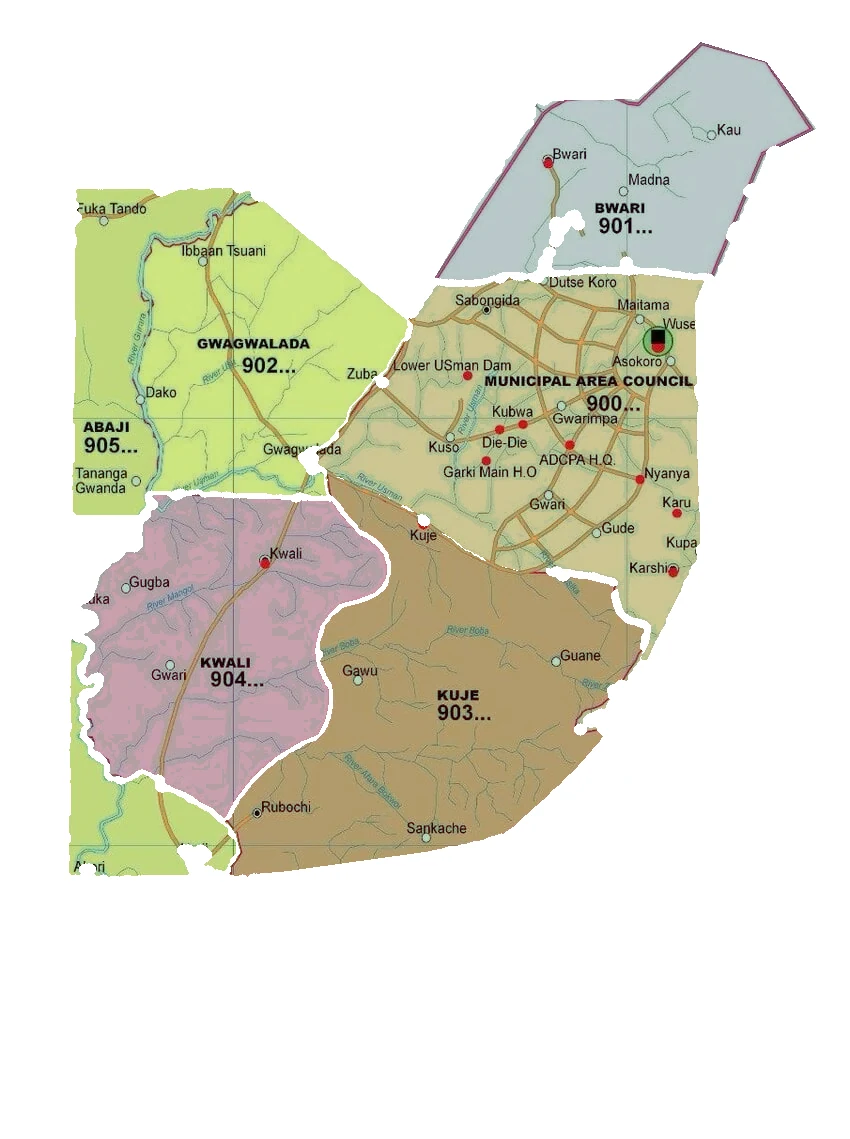 No Area Council selected.
Tap an Area Council
Explore the six communities shaping the future of the FCT.
The future
Abuja 2050
A capital built well — and built justly.
Imagine an Abuja that stands confidently among the world's great capitals.
Modern infrastructure. Strong institutions. Thriving businesses. Connected communities.
Young people participating in agriculture, technology, tourism, enterprise and the creative economy.
Historic settlements and cultural landscapes protected rather than erased.
Communities once treated as being at the margins fully participating in the life and prosperity of the capital.
An Abuja whose history is visible. An Abuja whose development is inclusive. An Abuja that belongs confidently to every Nigerian.
The choice is not between a modern Abuja and an inclusive Abuja. They should be the same city.
Ezekiel Dalhatu's Senate agenda
The unfinished story should notremain unfinished foranother generation.
Ezekiel Dalhatu's Senate agenda is to move the FCT's unfinished story from acknowledgement to action.
To protect heritage without stopping progress.
To strengthen communities without dividing residents.
To create economic opportunity rather than permanent dependency.
To give young people a stake in the future.
To make development more predictable, fair and inclusive.
And to ensure that the people whose ancestral lands made Abuja possible can participate fully in the prosperity of the capital that grew around them.
The goal is not to turn back the Abuja project. The goal is to complete it.
One of our own.
A voice for all.